
 hatta
Walk past any wagyu restaurant in Japan and you will see the same two characters on the menu: A5. Most travelers know it is the top grade — but what exactly is graded, and what does the grade not tell you? Here is a simple guide to reading Japanese beef grades before your wagyu meal in Kyoto.
A5 is a letter plus a number
Beef in Japan is graded by the Japan Meat Grading Association (JMGA), whose graders assess carcasses at wholesale meat markets and meat centers across the country. Every grade combines a letter and a number, giving 15 possible grades in total.
The letter: yield grade (A, B, C)
The letter shows how much usable meat a carcass yields. A is above standard, B is standard and C is below standard. It measures quantity — not flavor.
The number: meat quality grade (1–5)
Graders score four points, each on a scale of 1 to 5:
- Marbling — the fine fat within the lean, judged against the 12-level Beef Marbling Standard (BMS)
- Meat color and brightness
- Firmness and texture of the meat
- Fat color, luster and quality
The final quality grade is the lowest of the four scores. So “A5” means a top yield grade and the highest score on every one of the four quality points.
Three things A5 does not tell you
- The brand. Names such as Kobe beef or Yonezawa beef follow standards set by each brand’s own association. Kobe beef, for example, requires a quality grade of 4 or higher (yield A or B) and marbling of BMS No. 6 or above — so Kobe beef is not always A5, and A5 is not always Kobe beef.
- Heifer or steer. The grade says nothing about the animal’s sex. Kobe beef itself may come from unbred heifers or steers.
- Ageing and cooking. Two A5 steaks can taste very different depending on how they are aged and grilled.
When you order, ask about three things — grade, brand and whether it is a heifer. Together they tell you far more than the grade alone. (More: why Japanese connoisseurs choose heifer beef and Kobe vs Yonezawa vs Yamagata beef.)
A5 “Queen of Wagyu” at Gion MAI
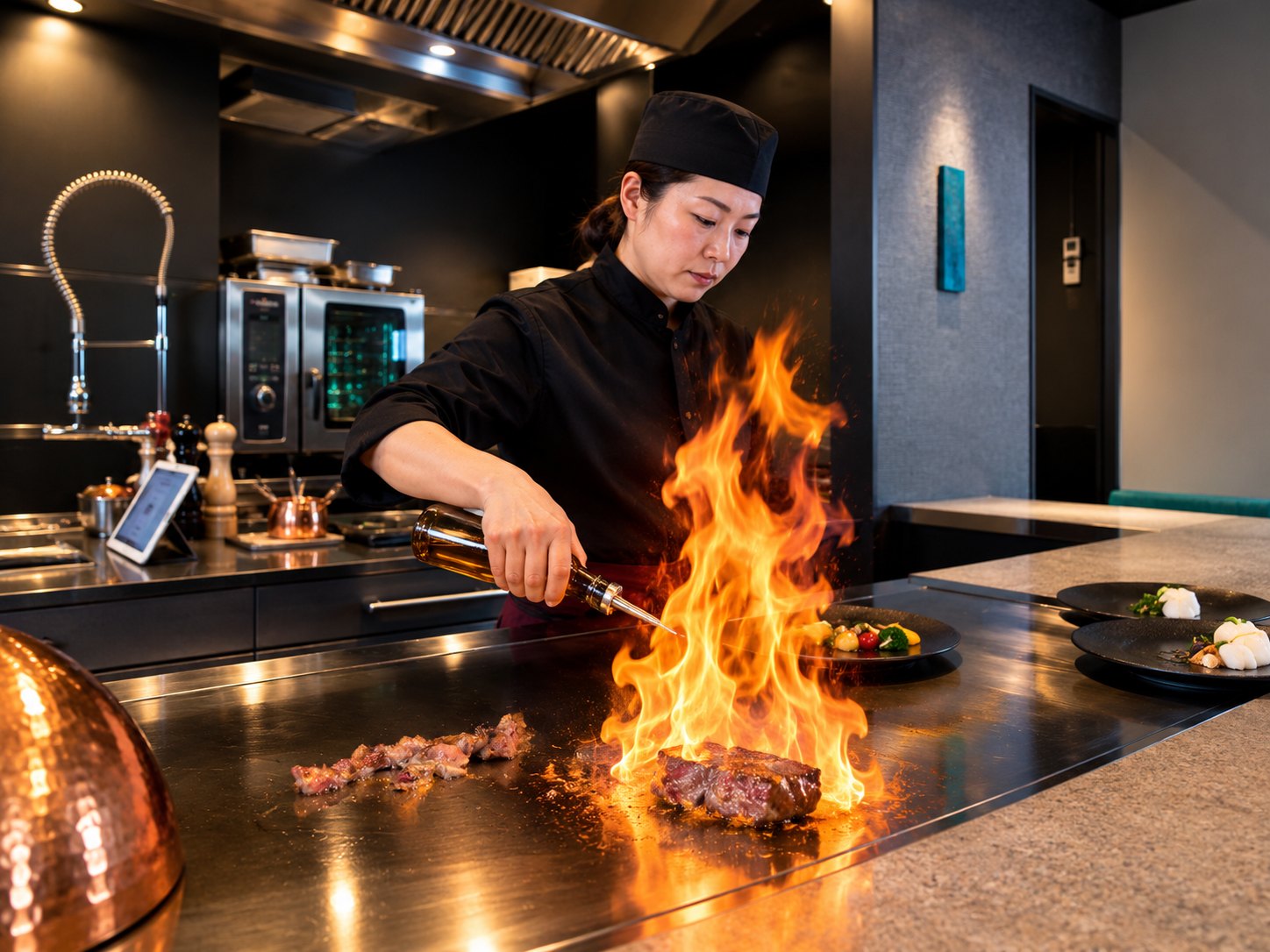
On historic Yasaka-dori, a 3-minute walk from Yasaka Pagoda, Gion 舞 MAI serves only A5 Heifer Wagyu — female cattle that have never calved. We call it the Queen of Wagyu.
- Kobe beef — genuine, traceable by its individual ID number, and always a heifer. Sirloin from ¥14,000 (80g).
- Yamagata beef — long-fattened heifers, aged in-house at MAI. Sirloin from ¥4,500, fillet from ¥6,000.
- 8 counter seats facing the teppan on the ground floor; 4 tables upstairs for families and friends.
Open 11:30–20:00 with no afternoon break (last entry and last order 19:00). Closed Wednesdays. Lunch and dinner share the same menu at the same prices. A 10% service charge is added to listed prices.
FAQ
Is A5 always better than A4?
A5 is the highest grade, but the grade only measures yield and four quality points. Flavor also depends on the brand, heifer or steer, ageing, the cut and how it is cooked.
Is all A5 wagyu Kobe beef?
No. A5 is a grade; Kobe is a brand. A5 wagyu is produced all over Japan, and Kobe beef can also be certified at grade 4.
What grade of wagyu does MAI serve?
Only A5 heifer wagyu — for both Kobe beef and Yamagata beef.
Book your table
Walk-ins are welcome. Counter seats fill up quickly in the evening, so if you have a preferred time or seat, we recommend booking ahead. Reserve on the Gion 舞 MAI page.